About the Project
The idea
In early 2022 a YouTube video crossed my feed: someone had built a working submarine out of Lego Technic — motorised, watertight (enough), actually submerging in a pool. It looked incredible. It looked doable. My son and I watched it twice and immediately started talking about building one ourselves.
The original plan: one weekend. Buy the parts, follow the approach, done.
What actually happened
The parts list alone took two weeks to sort out. Then the first hull attempt leaked. Then the motor configuration didn't produce enough thrust. Then we rethought the ballast system. Then life happened — school, work, travel — and the submarine sat half-finished on a shelf for months at a stretch.
Each time we came back to it, we found something we'd gotten wrong, or something we wanted to improve. The scope didn't grow wildly, but the rework did. This is the thing nobody tells you about physical builds: iteration is expensive. You can't just push a fix — you have to take it apart.
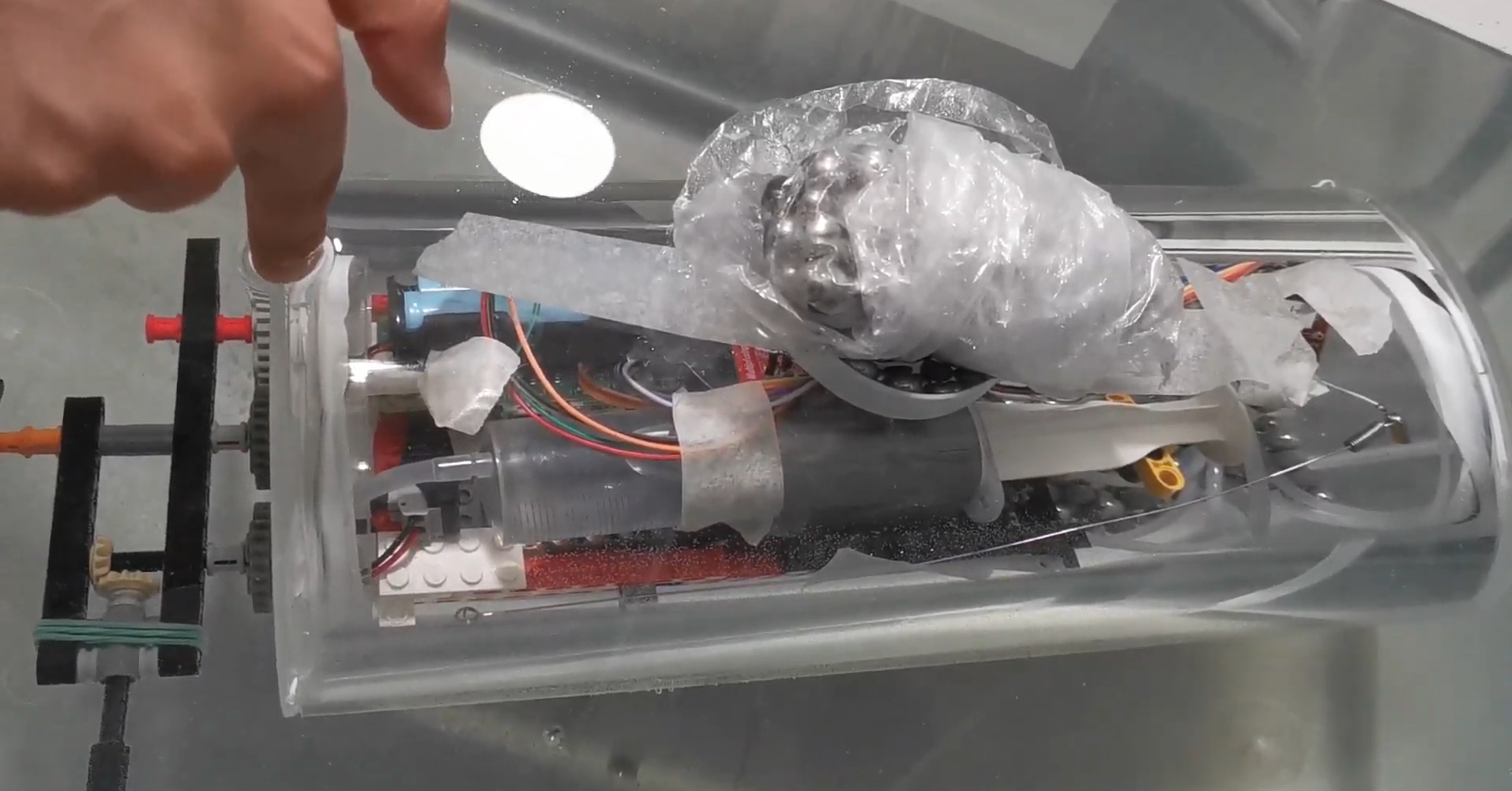
Proof of work: the submarine, finished.
What it taught me
Uncertainty is front-loaded but you feel it throughout. The plan looked clear at the start. The unknowns only became visible as we built.
Delays compound. A two-week parts delay, a month off for summer, a restart after a failed test — none felt catastrophic alone. Together they consumed a year.
Finishing matters more than finishing fast. Around month four this stopped being fun. We kept going anyway. The moment it finally submerged under its own power was worth every restart.
A father-son project has a different kind of deadline. Kids grow. The window for building things together is not infinite. That added its own quiet urgency.
Status
Completed, 2023. The submarine lives on a shelf. It no longer submerges — one of the seals gave out — but we're not sure we want to fix it.